Custom Software Development
Portals, e-services, case management and internal systems built around your processes and connected to the systems you already run.
Learn more
We digitise services, automate the workflows behind them and connect the systems you already run, for government entities and enterprises in Egypt and the Gulf.
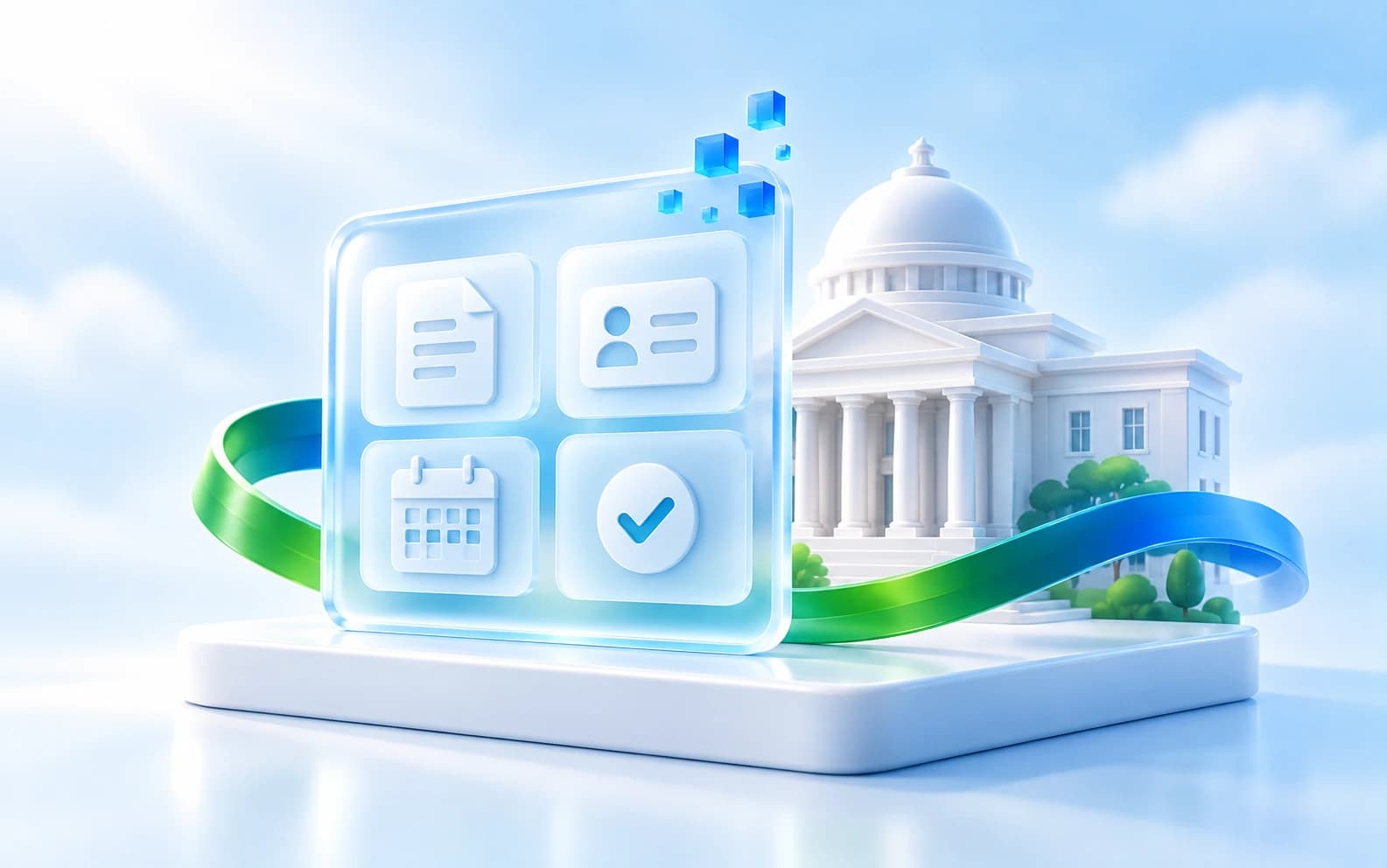
Digital transformation is the redesign of how an organisation works and serves people using digital technology: services move online, paper steps become automated workflows and decisions rest on data. System integration is what holds it together, because it lets systems exchange data on their own instead of people typing the same information twice.
Sustainable Software Solutions delivers digital transformation and system integration from Cairo. We link portals, e-services and case management systems to the systems you already run and automate the processes between them, so a digitised service works end to end, in government and in business alike.
We start from one service and follow it from the first request to the final result. A transformation that is planned service by service delivers something people can use at every stage, and does not wait years for a single launch.
What it covers
Six parts of the work. Most projects need several of them together.
A service offered at a counter becomes an e-service: the request, its documents, the payment and the result all move online.
Approvals, reviews and notifications follow defined rules, so a request moves to the next person without being carried there.
Portals and applications exchange data with the systems you already run through defined interfaces (APIs).
Older systems that still do their job stay in place and are connected to the new services, not replaced for the sake of it.
Records move from paper, spreadsheets and old systems into the new one, checked before the switch.
We cut over to the new way of working and hand it over without surprises, so your people can run it.
Four terms, four meanings
The words are often used as one. Telling them apart shows how far a project really goes.
Turning paper records and forms into digital data. The process itself does not change.
Running an existing process on a system that routes the work and applies the rules.
Joining systems so that data entered in one is available in the others.
Redesigning the service around what the first three make possible, then measuring the result.
How we deliver
Five steps, each ending in something you can see, test and sign off.
STEP 01
We follow the service as it runs today, step by step, and list the systems it touches.
STEP 02
We agree the new process, the integrations it needs and the order in which services go live.
STEP 03
We build one service at a time, end to end, with working software at every stage.
STEP 04
We migrate the records, cut over to the new process and hand it over.
STEP 05
We measure how the service performs, tune it and move on to the next one.
Questions & answers
With one service that matters to many people and can be followed from request to result. Delivering it end to end shows what the organisation needs, in systems, data and skills, before the programme widens.
Usually not. We connect portals, e-services and case management systems to the systems you already run. A system is replaced only when connecting it would cost more than it is worth.
System integration connects separate software systems so that they share data and work as one. A request entered in a portal, for example, reaches the back-office system without anyone typing it again.
Yes. For government entities we build portals, e-services, case management and workflow automation, connected to the systems they already run. Government is one of the six sectors we serve.
Automation follows rules that people wrote: if a request is complete, send it for approval. AI handles steps that rules cannot describe, such as reading a scanned document or forecasting demand. The two work together in intelligent automation.
By the service, not the technology: how long a request takes, how many steps and visits it needs, and how many requests finish without manual correction. We agree these measures at the design step and track them once the service is live.
Keep exploring
Portals, e-services, case management and internal systems built around your processes and connected to the systems you already run.
Learn moreAssessment, strategy, architecture and a roadmap grounded in what your teams can actually run.
Learn moreDocument understanding, forecasting and assistants that work on your own data, built on data whose quality and governance are in place.
Learn moreTell us which service you want to transform first and which systems it touches. Our team in Cairo replies within two working days.